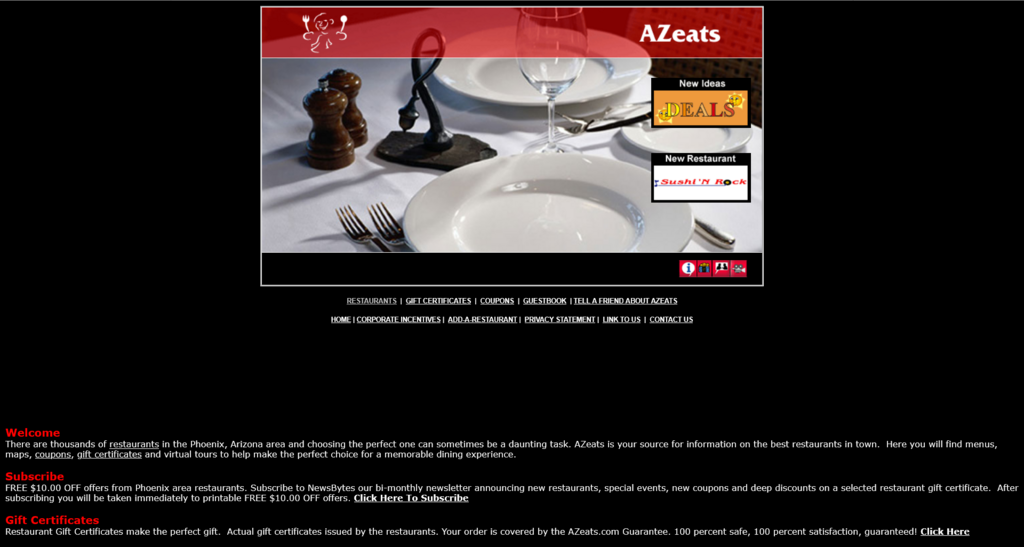
A visual history of the AZeats.com homepage, preserved through the Internet Archive captures and original AZeats materials.
Explore the Archived AZeats.com
Each homepage image links to its corresponding archived capture in the Internet Archive's Wayback Machine. Click an image to view the original archived page, then explore the site's subpages and links to see more of AZeats as it appeared at the time. Some archived pages also contain animated images and other elements that are best experienced by visiting the original capture.
The Wayback Machine provides a unique opportunity to go beyond these homepage snapshots and experience portions of the AZeats.com website as visitors did when it was originally online.
AZeats.com was founded in 1998 during the early days of the commercial Internet. At a time when most restaurants had little or no online presence, AZeats introduced a new way for diners to discover restaurants, browse menus, print coupons, purchase gift certificates, and explore Arizona's dining scene through the World Wide Web.
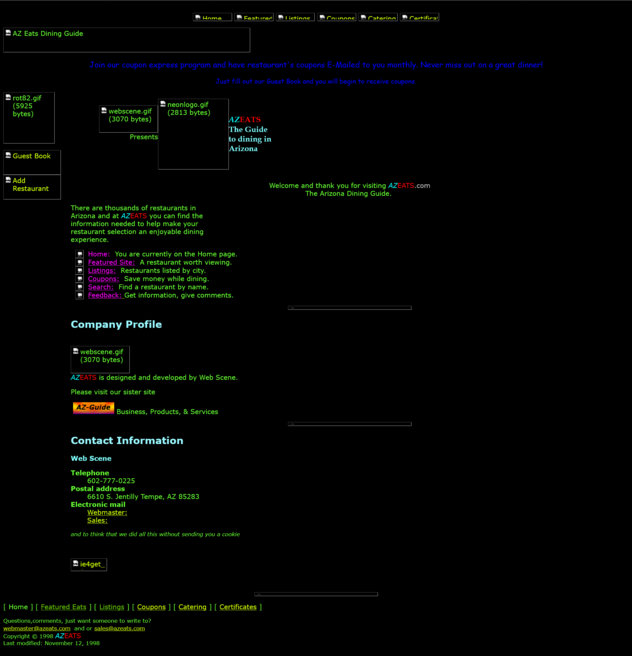
This homepage represents the earliest days of AZeats. Designed when dial-up Internet connections and desktop computers were the norm, the site reflected both the technical limitations and the excitement of the emerging World Wide Web. Bold colors, simple navigation, and graphic-rich pages were common design choices of the era.
From the beginning, the vision for AZeats was straightforward: help Arizona restaurants establish an online presence while making it easier for diners to discover new places to eat. Long before social media, smartphones, or online food delivery services, AZeats demonstrated how the Internet could connect restaurants and customers in entirely new ways.
Some homepage captures from the Internet Archive’s Wayback Machine are missing images or other visual elements because those files were not captured or preserved when the page was archived. The archived HTML may still be available, but without the original image files, the page cannot be displayed exactly as it appeared at the time. Missing images therefore reflect limitations of the historical web archive, not the original AZeats.com homepage.
AZeats The Guide to Dining in Arizona. Food, fun, restaurants, eating, and drinking.
← Back → Forward ↻ Refresh ⌂ Home
http://www.azeats.com/ Wayback capture: December 2, 1998
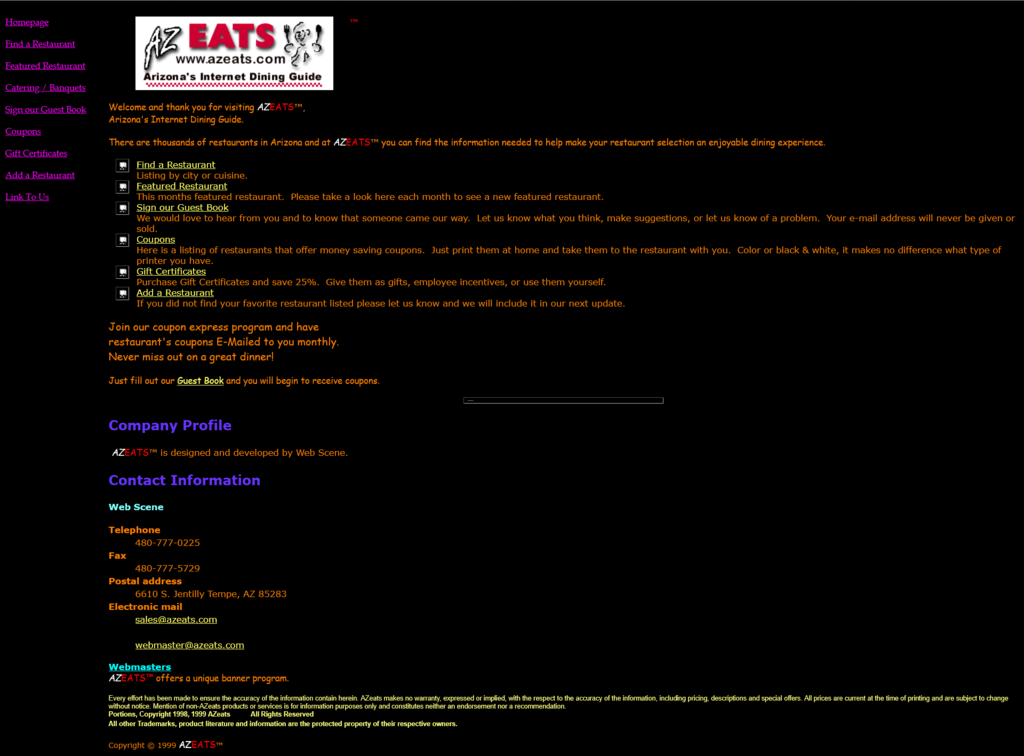
By April 1999, AZeats.com was growing rapidly as more restaurants recognized the value of establishing an online presence.
New restaurant websites, expanded features, and increased public awareness helped position AZeats as a trusted online dining resource for Arizona.
AZeats The Guide to Dining in Arizona. Food, fun, restaurants, eating, and drinking.
← Back → Forward ↻ Refresh ⌂ Home
http://www.azeats.com/ Wayback capture: 04/29/1999
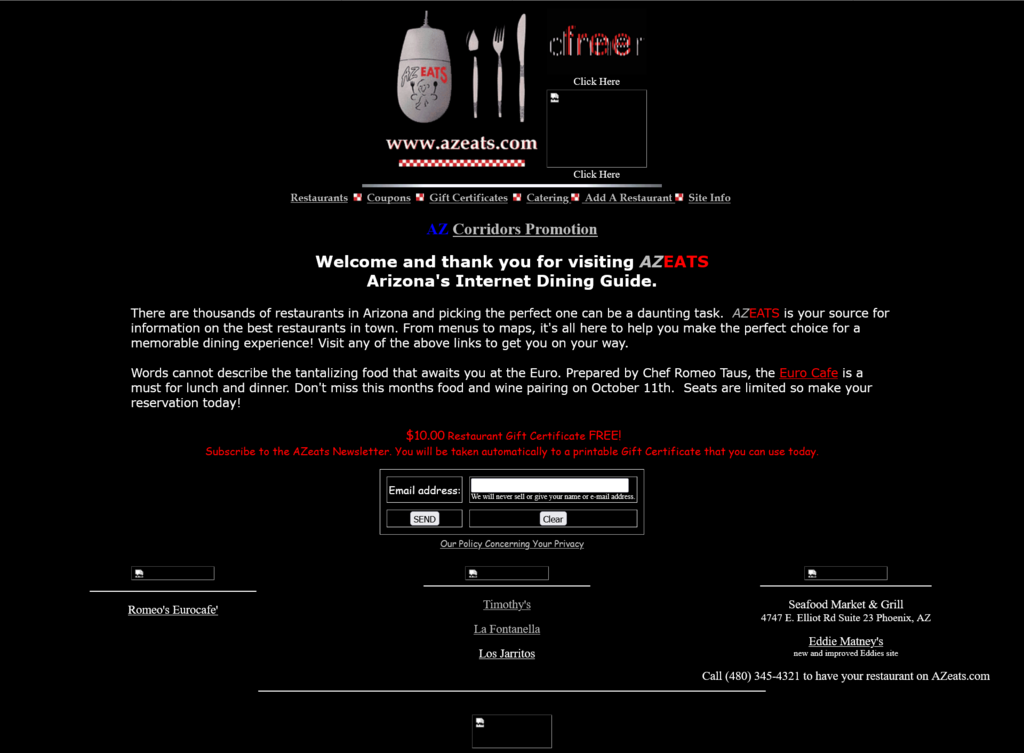
By its second year, AZeats was becoming more than a directory of restaurants. The website expanded its services, attracted additional restaurant clients, and continued experimenting with new ways to connect restaurants with customers through the Internet. As more people gained access to the Web, AZeats evolved alongside the rapidly changing online world.
AZeats The Guide to Dining in Arizona. Food, fun, restaurants, eating, and drinking.
← Back → Forward ↻ Refresh ⌂ Home
http://www.azeats.com/default.htm Wayback capture: 10/13/1999
As the Internet continued to mature, AZeats adapted to new technologies while remaining focused on helping restaurants reach customers online. The website had become part of Arizona's developing digital landscape.
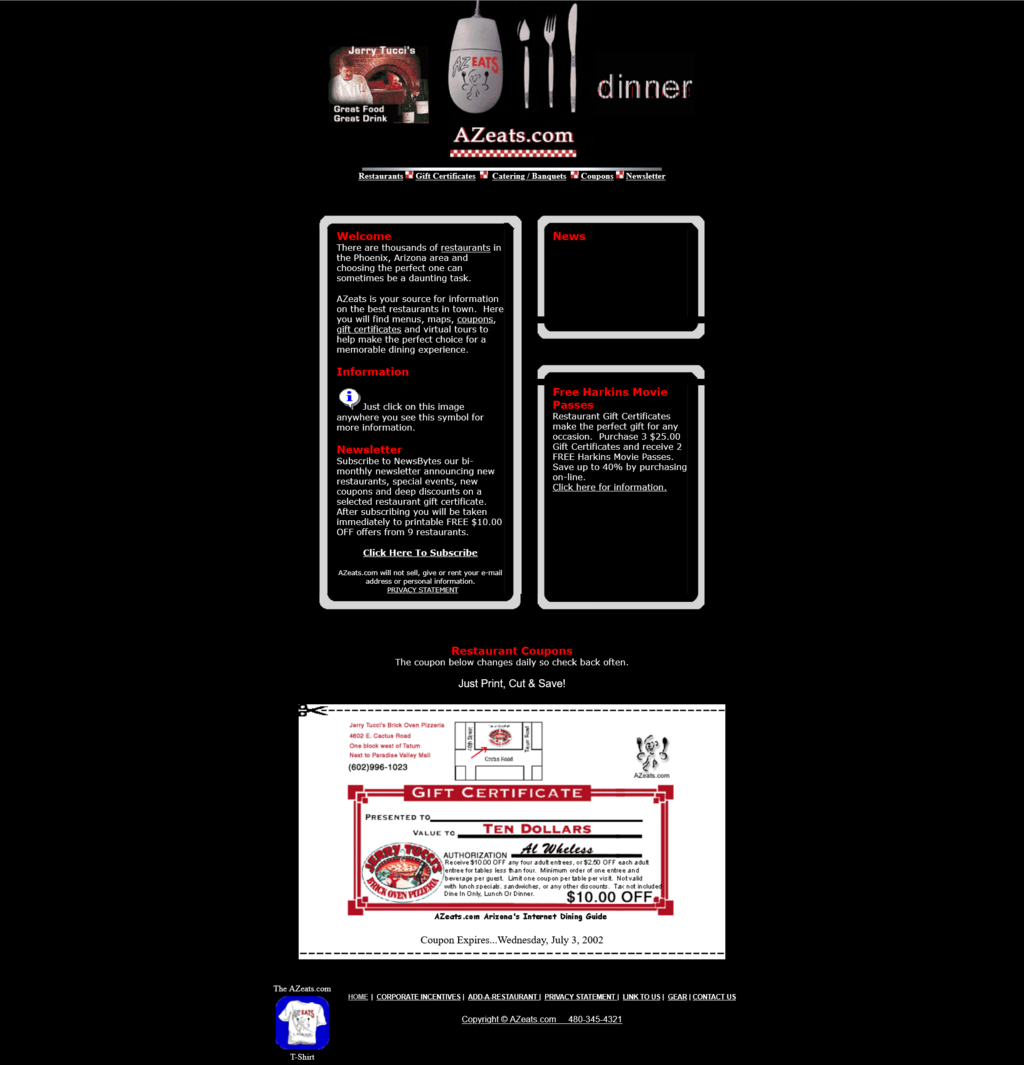
By 2002, AZeats had grown far beyond its original concept. New features, expanded restaurant participation, and continued innovation demonstrated how quickly the Internet had transformed from a novelty into an essential business tool. The evolution of AZeats mirrored the rapid changes taking place across the World Wide Web during the early 2000s.
AZeats Arizona Restaurant Guide, Gift Certificates Coupons Menus
← Back → Forward ↻ Refresh ⌂ Home
http://www.azeats.com/default.htm Wayback capture: 06/03/2002
By 2003, AZeats had become a familiar online destination for Arizona diners and restaurants alike. As Internet usage continued to grow, the website expanded its content, refined its services, and adapted to the changing expectations of both restaurant owners and visitors.
The Internet was no longer a novelty. Businesses increasingly recognized the value of maintaining an online presence, and diners had come to expect restaurant information to be only a few clicks away. AZeats continued to evolve by supporting its growing network of restaurant clients while exploring new ideas and technologies that enhanced the online dining experience. The website reflected a period of steady growth, innovation, and optimism as the commercial Internet entered a new stage of maturity.
AZeats.com - Arizona's Internet Dining Guide
← Back → Forward ↻ Refresh ⌂ Home
http://www.azeats.com/Default.htm Wayback capture: 08/02/2003