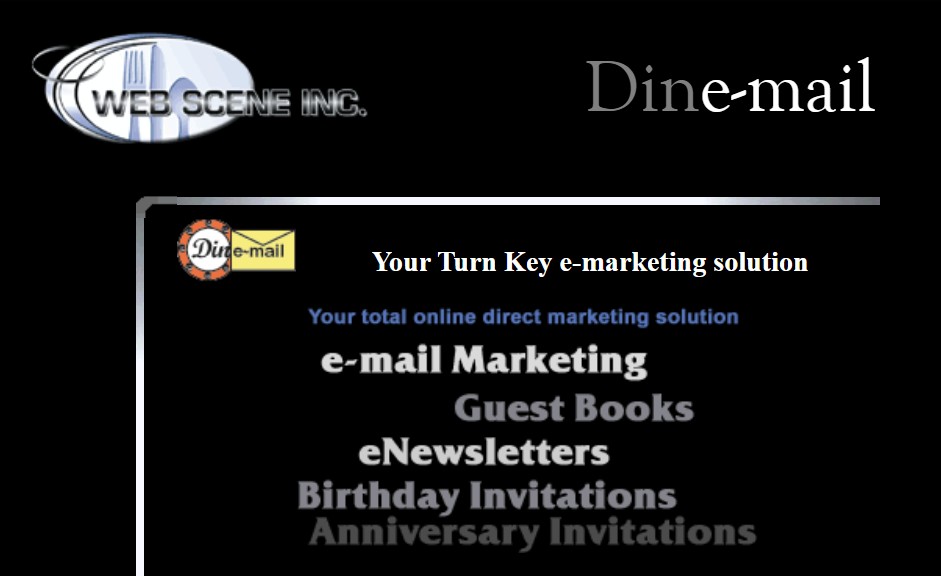
In the late 1990s, before Facebook, Instagram, Yelp, or text-message promotions, one of the most effective ways to keep customers returning to a restaurant was surprisingly simple—email.
At AZeats.com, we called it Dine-mail.
Client here to view the Dine-mail Lead Generation Site from September 2004.
This link will open a fully operational website on the Internet Archive Wayback Machine.
While NewsBytes was the front-facing newsletter, Dine-mail functioned as the subscriber acquisition system and underlying email distribution platform behind it. At the time, it was something entirely new for many restaurants. Most independently owned restaurants had no website, no customer mailing list, and certainly no automated marketing system. Dine-mail gave them a way to stay in contact with customers long after they had finished their meal.
The Problem
Building a Digital Customer List
Visitors to AZeats.com could subscribe to receive the AZeats.com newsletter, NewsBytes.
Subscribers were interested in dining out and wanted to receive restaurant coupons, gift certificate specials, announcements, and information about new restaurants joining the AZeats.com online dining guide.
Instead of sending generic advertising, Dine-mail delivered offers people actually wanted by email.
Typical messages included:
Each newsletter gave subscribers another reason to dine out.
A Win for Restaurants
Because Dine-mail was built directly into every AZeats website, it gave client restaurants an affordable form of targeted advertising.
Instead of paying to reach everyone, they reached people who had already expressed an interest in local dining.
Even better, every email could include direct links back to the restaurant's website on AZeats.com, allowing customers to view menus, driving directions, printable coupons, or purchase gift certificates.
Years before the term digital marketing became common, AZeats was helping local restaurants bring customers directly from an email to their website.
Technology of the Time
By today's standards the technology was simple.
The mailing list was managed using a custom application written specifically for AZeats. Unlike today's cloud-based email platforms with drag-and-drop editors and detailed analytics, Dine-mail was built from the ground up to meet the needs of a growing restaurant network.
Messages were carefully formatted so they could be read in the email programs of the day, many of which had limited support for graphics or advanced formatting.
Reliability mattered more than appearance.
If an email successfully delivered a coupon that brought a family into a restaurant that weekend, it had done its job.
Building Relationships Instead of Transactions
One of the biggest advantages of Dine-mail was consistency.
Rather than waiting for customers to accidentally discover a restaurant again, restaurants could stay in touch throughout the year.
Every message reminded subscribers that there were new places to visit, new menu items and new offers waiting.
Instead of advertising once, restaurants could build an ongoing relationship with their customers.
Before Social Media
Today restaurants can reach customers through Facebook, Instagram, Google Business Profiles, online ordering apps, and countless other platforms.
In the late 1990s, those tools simply did not exist.
Email was one of the few direct communication channels available and Dine-mail helped local restaurants take advantage of it years before email marketing became a standard business practice.
Many concepts now considered normal—subscriber lists, promotional emails, digital coupons, clickable restaurant links, and seasonal campaigns—were already being used by AZeats.
Looking Back
Dine-mail may seem ordinary today, but when it was introduced, it represented a major shift in how restaurants communicated with customers.
It demonstrated that the Internet wasn't just a place to publish information—it could also become an ongoing conversation between businesses and their customers.
Long before automated marketing platforms, social media campaigns, or mobile apps, Dine-mail helped independent restaurants stay connected with the people who enjoyed dining there.
Sometimes the most innovative ideas aren't the most complicated.
Sometimes they're simply the right idea at the right time.
For AZeats.com, Dine-mail was one of those ideas.
"Bill encouraged restaurant owners to send short, weekly emails to their Dine-mail subscribers highlighting upcoming specials or events. It didn't take an elaborate campaign—just a couple of quick sentences announcing a Friday prime rib special or a weekend live band. Because the messages were brief, friendly, and completely free for the restaurant to send, they provided immediate value without feeling intrusive."