During the late 1990s and early 2000s, having a website was still a new idea for many restaurants. Most independently owned restaurants had little or no presence on the Internet, and those that did often relied on simple, text-based pages with limited information.
AZeats approached restaurant websites differently.
Rather than creating generic templates, each website was individually designed to capture the unique personality, atmosphere, and dining experience of the restaurant it represented. Colors, photography, typography, and graphics were carefully selected to reflect each restaurant's character—from casual neighborhood cafés to elegant fine dining establishments.
The websites featured in this gallery represent more than examples of early web design. They document a period when the Internet was transforming how businesses connected with their customers. Working within the technical limitations of dial-up Internet connections and the browsers of the day, AZeats created websites that were both visually engaging and practical for restaurant owners and their guests.
Today, many of these original websites no longer exist. Through archived screenshots and preserved materials, this collection celebrates the creativity, craftsmanship, and innovation that helped define Arizona's early online restaurant community.
We hope you enjoy this journey back to the early days of the World Wide Web, when every restaurant website was designed by hand and every page reflected the personality of the business it represented.
Click here to view and extensive listing of AZeats restaurant clients, many with links to view their home pages.
Showcased below are the home pages of client restaurants, they are compiled from archived webpages and Internet Archive Wayback Machine captures.
When AZeats began building restaurant websites in the late 1990s, one of its earliest and most important relationships was with Nello's Pizza. Although this was not the first website ever created by AZeats, Nello's became the company's first restaurant client, marking the beginning of a partnership that helped define the direction of the business.
The AZeats website was designed to capture the warmth and personality that diners experienced when they walked through Nello's doors. At a time when many restaurants had little or no Internet presence, the website gave customers an opportunity to explore the menu, learn about the restaurant, and discover one of Arizona's most respected neighborhood pizzerias before ever arriving.
The website showcased here represents more than an early restaurant website. It marks the beginning of AZeats' work with Arizona's restaurant industry and the start of a journey that would eventually lead to the creation of hundreds of restaurant websites throughout Arizona, Colorado, and Southern California. For the AZeats History Project, Nello's Pizza will always hold a special place as the company's first restaurant client.
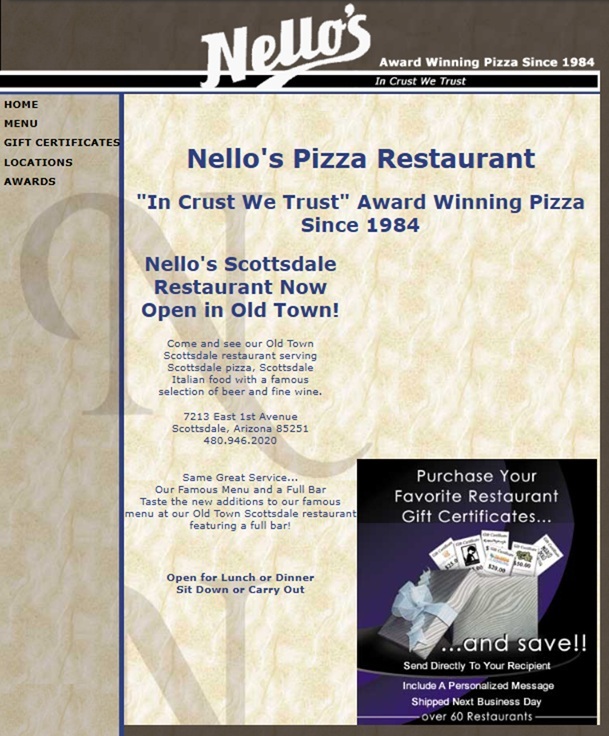
★ AZeats' First Restaurant Client
Although this is not the original website created by AZeats for Nello's Pizza, Nello's Pizza was the company's first restaurant client and helped launch what would grow into one of Arizona's pioneering restaurant web development companies.
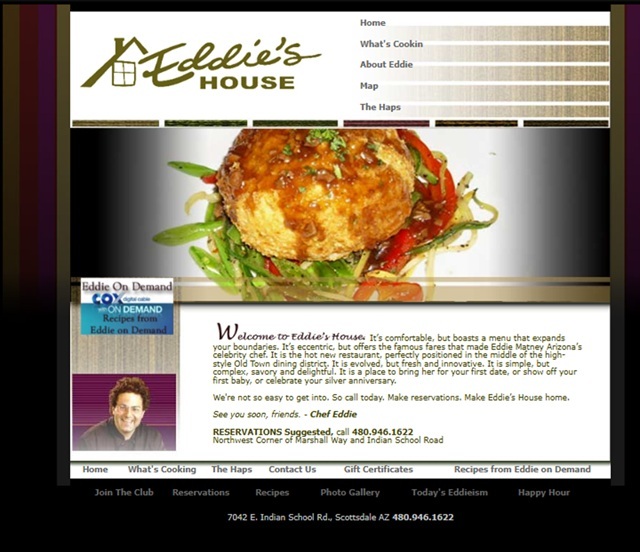
Long before he became one of Arizona's most recognized chefs and television personalities, Eddie Matney was already building a reputation for creative cuisine and memorable dining experiences. After arriving in Arizona in 1986, he opened a series of successful restaurants that showcased his innovative approach to contemporary American cuisine, eventually earning numerous culinary awards and widespread recognition throughout the Valley.
As AZeats expanded its portfolio of restaurant websites, Eddie Matney became one of the company's early clients. The website was designed to reflect the same creativity and attention to detail that guests experienced in his restaurant. Rather than serving simply as an online menu, it introduced visitors to the chef, the restaurant's personality, and the dining experience that made Eddie Matney a favorite among Arizona food enthusiasts.
The website showcased here represents an important period in both the evolution of AZeats and the growth of Arizona's restaurant industry on the Internet. At a time when many restaurants were only beginning to recognize the value of having a professional online presence, AZeats worked closely with chefs and restaurateurs like Eddie Matney to create websites that captured the character of their establishments while inviting new guests through their doors.
Today, this preserved website serves as a snapshot of Arizona's early culinary and Internet history, documenting the collaboration between one of the state's pioneering restaurant web developers and a chef whose influence on the Valley's dining scene continues to be recognized decades later.
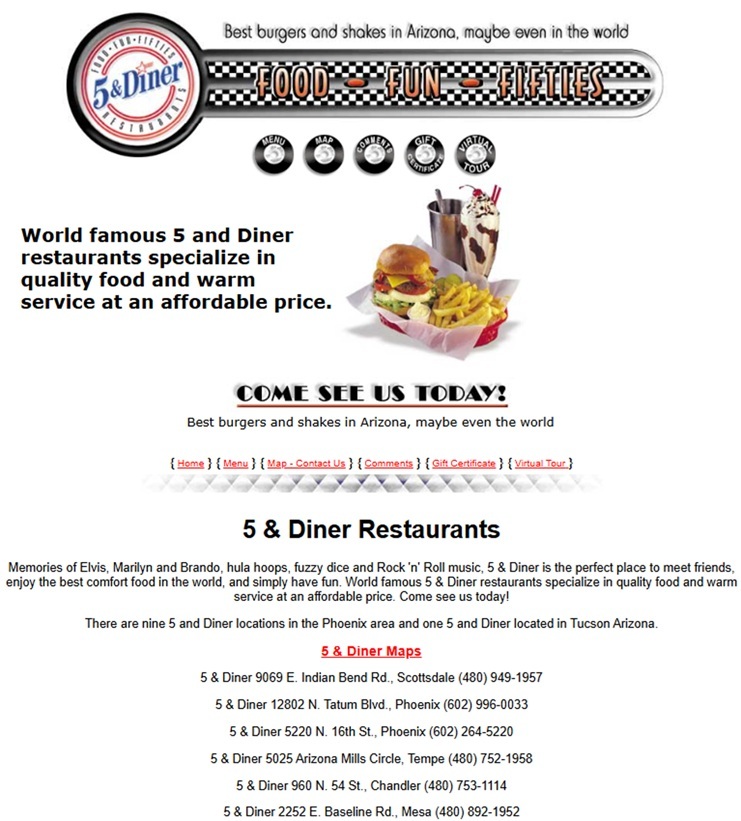
Few restaurants captured the nostalgia of America's classic roadside diners quite like 5 & Diner. From chrome accents and checkerboard patterns to vintage décor and classic comfort food, every location celebrated the spirit of the 1950s while serving burgers, fries, hand-spun milkshakes, and hearty breakfasts in a fun, family-friendly atmosphere.
As one of AZeats' featured restaurant clients, the website was designed to reflect that same nostalgic experience. Rather than simply listing a menu and contact information, the site embraced the restaurant's distinctive personality through bold graphics, themed typography, colorful photography, and playful design elements inspired by the golden age of American diners. Every page was created to give visitors a sense of the experience that awaited them before they ever walked through the front door.
The website also showcased features that were considered innovative for their time, including online menus, location maps, gift certificates, customer comments, and virtual tours. During an era when many independent restaurants had little or no presence on the Internet, these interactive features helped 5 & Diner connect with customers in new and exciting ways.
Today, this website stands as an excellent example of the creativity and craftsmanship that defined AZeats during the early years of the commercial Internet. It demonstrates how thoughtful graphic design and attention to a restaurant's unique identity could transform a simple website into an extension of the dining experience itself.
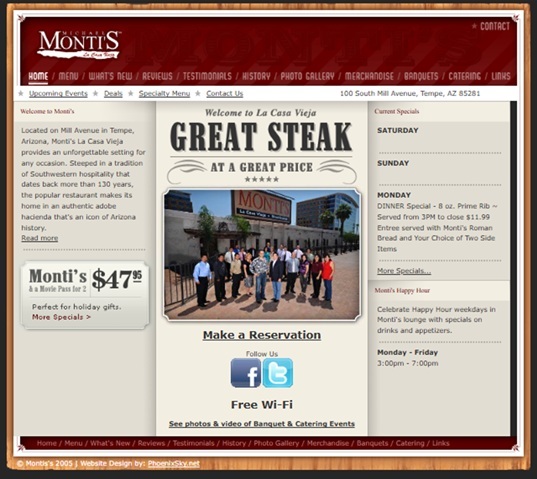
Few Arizona restaurants possess a history as rich and enduring as Monti's La Casa Vieja. The story began in 1954 when Leonard F. Monti purchased Hayden's historic adobe home in Tempe. After carefully restoring the property, he opened Monti's La Casa Vieja—Spanish for "The Old House"—in 1956. Over the decades, the restaurant became one of Arizona's most recognized dining destinations, celebrated for its steaks, Southwestern hospitality, and unique setting in one of the state's oldest surviving adobe buildings.
When AZeats developed the Monti's website, the objective was not simply to present a menu—it was to introduce visitors to the restaurant's remarkable history and timeless character. The design reflected the warmth and elegance of the adobe hacienda while providing guests with easy access to menus, special events, reservations, banquet information, photographs, and the restaurant's fascinating story. Every element was crafted to encourage visitors to experience a place that had become an Arizona tradition.
The website also demonstrated how restaurant websites had matured by the mid-2000s. Beyond basic contact information, it offered regularly updated specials, event announcements, customer reviews, photo galleries, and one of the restaurant's first opportunities to connect with guests through emerging social media. It served as both a marketing tool and a digital extension of the Monti's experience.
Today, this preserved website stands as a snapshot of an iconic Arizona restaurant during an important chapter of its history. It also reflects AZeats' philosophy that every restaurant deserved a website as distinctive as the establishment itself. Rather than relying on generic templates, the website captured the history, atmosphere, and personality that had made Monti's La Casa Vieja a beloved Arizona landmark for generations.
Monti's La Casa Vieja illustrates how AZeats tailored every website to reflect the identity of its client. By blending the restaurant's rich history with modern web technology, the site became more than an online brochure—it became a digital welcome to one of Arizona's most treasured dining traditions. It remains an excellent example of how AZeats helped preserve a restaurant's story while inviting a new generation of guests through its doors.
As AZeats continued to expand its portfolio of restaurant websites, projects became increasingly sophisticated. One of the most ambitious was the development of a unified gateway for Mastro's Restaurants, providing visitors with a single point of entry to three distinct dining concepts: Mastro's Steakhouse, Mastro's Ocean Club, and Mastro's City Hall Steakhouse.
Rather than designing a website for a single restaurant, AZeats created an elegant entrance that reflected the Mastro's brand while allowing guests to choose the dining experience they were seeking. The homepage served as a central hub, guiding visitors to three individually designed websites, each showcasing its own atmosphere, menus, locations, and distinctive character while maintaining a consistent family identity.
The design embraced the understated elegance for which Mastro's became known. Clean lines, refined typography, rich photography, and a restrained color palette conveyed a sense of luxury and sophistication. The website reflected the same attention to detail and commitment to quality that guests expected when dining at any Mastro's restaurant.
This project demonstrated how restaurant websites had evolved since the early days of the commercial Internet. No longer limited to presenting basic information, websites had become an extension of a restaurant's brand, capable of supporting multiple locations and concepts while providing customers with a polished and memorable online experience.
As AZeats expanded its portfolio of restaurant websites
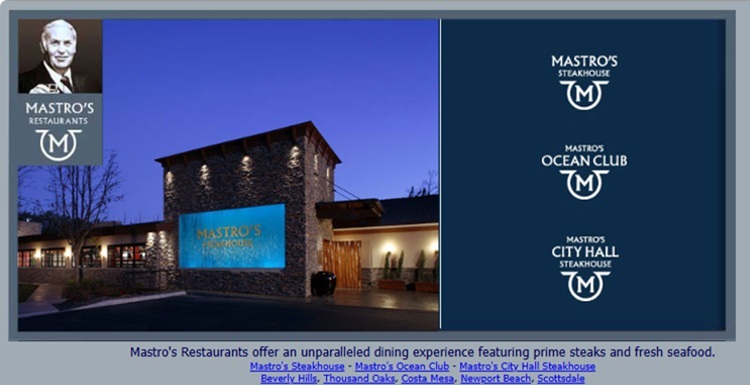
The Mastro's gateway website represents an important milestone in the evolution of AZeats. By serving as the entrance to three separate restaurant brands, it showcased the growing complexity of restaurant web development and illustrated how the Internet had become an essential marketing tool for premier dining establishments. It remains an excellent example of AZeats' ability to create custom websites that reflected the unique identity and aspirations of each client.
As AZeats expanded its portfolio of restaurant websites